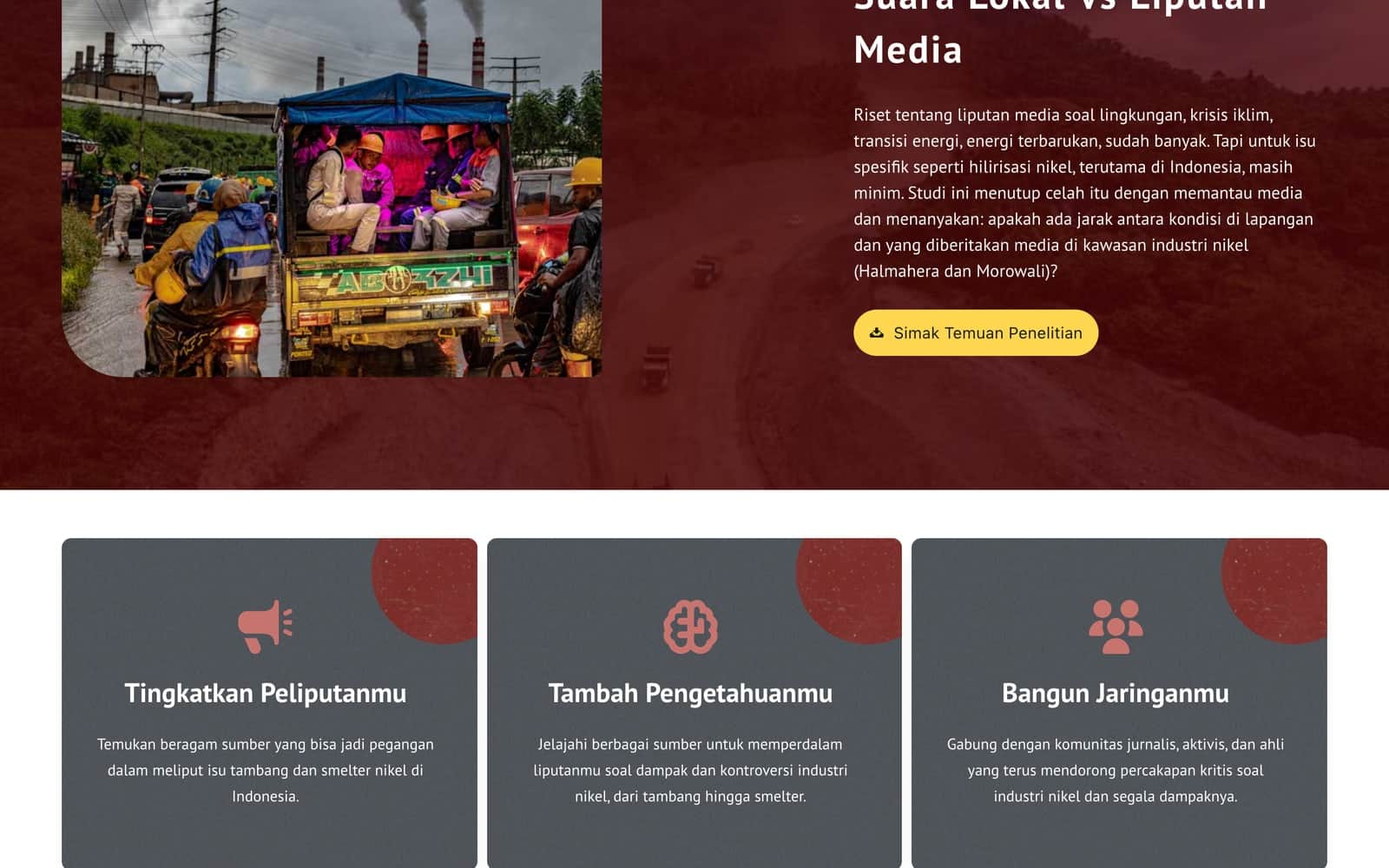
Indonesia mines the metal that powers the energy transition. This toolkit hands its journalists the questions no one is asking.
A journalism training platform, built in Bahasa Indonesia, that arms reporters in Halmahera and Morowali to investigate the nickel industry from the ground up — from indigenous land rights to the regulatory fine print.
The challenge
Indonesia sits at the center of the global battery supply chain, yet the reporting on its nickel boom rarely reaches the ground-level conditions in the smelting and mining zones. Original fieldwork exposed a gap between what happens in Halmahera and Morowali and what makes it into coverage. The client needed a resource that did more than explain the industry — it had to equip working Indonesian journalists to investigate it, in their own language, on their own terms.
The approach
VizStats designed and built a journalism toolkit natively in Bahasa Indonesia — not a translation of the sister platform climatereporting.net, but a full reimagining for the Indonesian context. We structured the platform around how reporters actually work: hands-on reporting guides, a story hub, a knowledge base, and an expert network. Every guide traces the industry's hidden costs to a concrete line of inquiry a journalist can pursue.
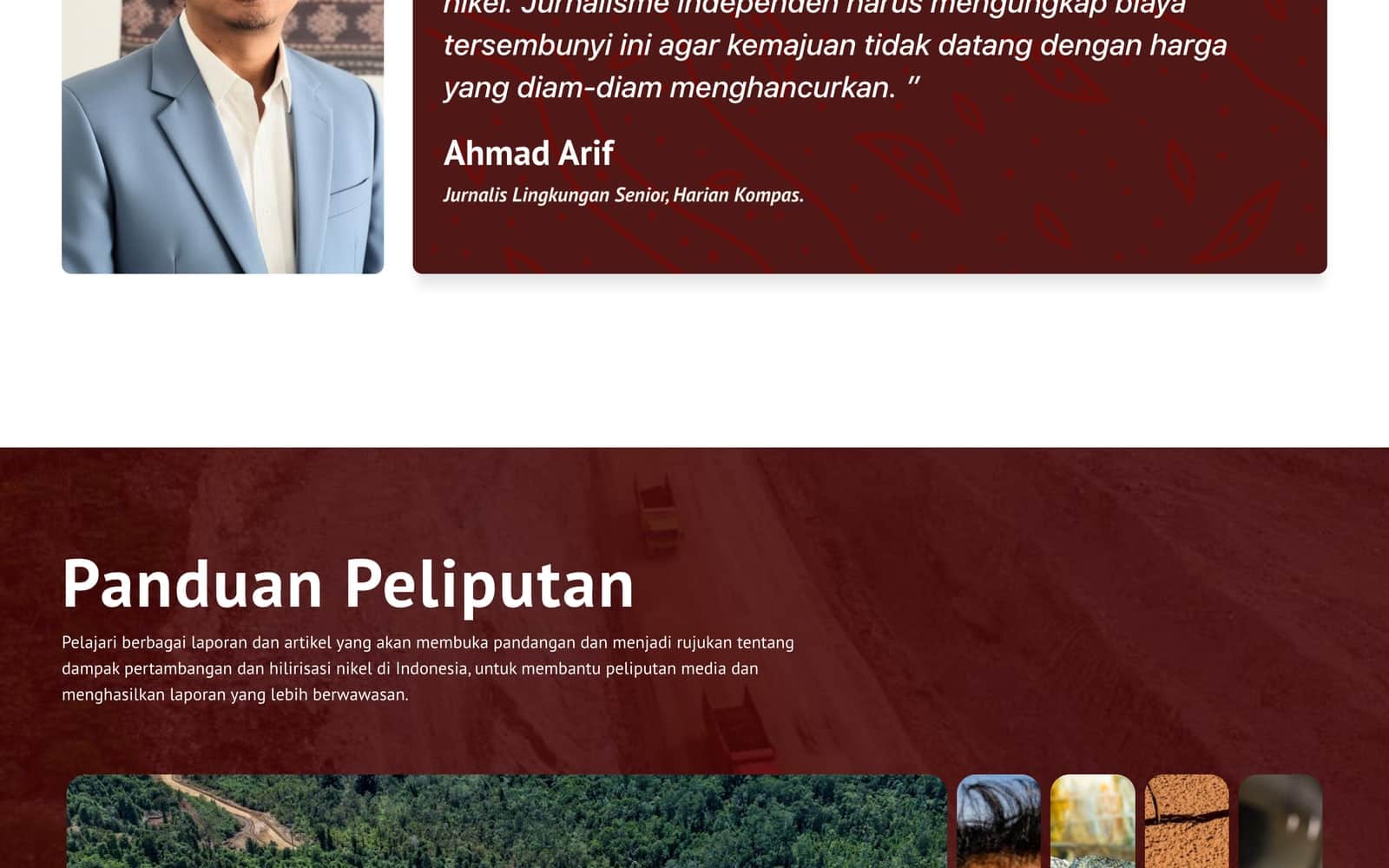
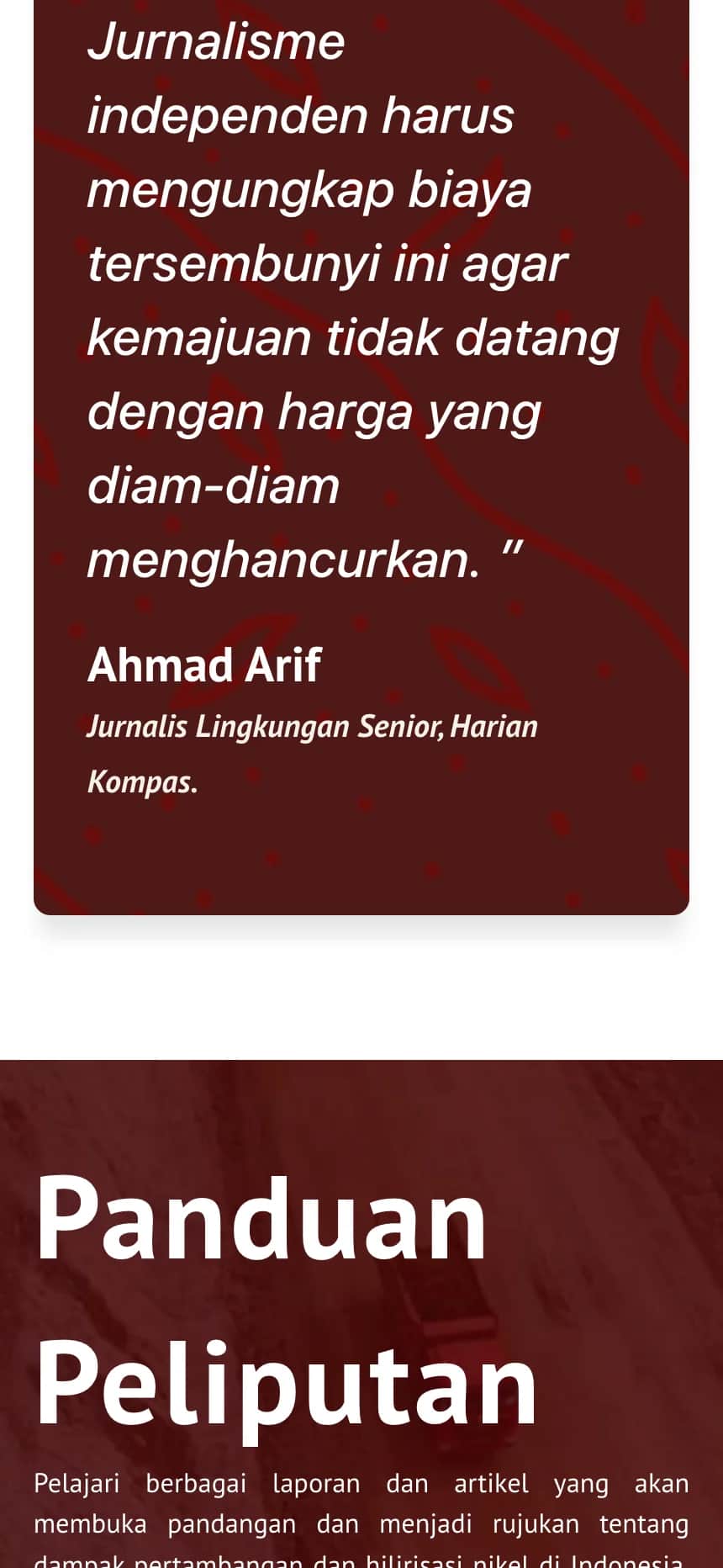
“The metal that promises a cleaner future has costs that stay buried unless someone goes looking. This toolkit tells Indonesian journalists exactly where to dig.”
A toolkit shaped by fieldwork, not translation
The platform is a sister to climatereporting.net, but it was never going to be a translated copy. Indonesia's nickel story is its own — the indigenous communities of Halmahera, the smelting corridors of Morowali, the specific regulatory frameworks that govern who mines what. So we built the toolkit natively in Bahasa Indonesia and grounded it in original research on the distance between conditions on the ground and the coverage that reaches readers. The guides map that terrain directly: the hidden costs of Indonesia's nickel industry, the threats to indigenous land rights, the key ESG and IPLC issues, the industry's major players, and the regulation that shapes all of it. Each one turns a systemic problem into a set of questions a reporter can carry into the field.
Structured for the newsroom, credentialed by the field
The architecture follows a journalist's workflow rather than a taxonomy of the industry. Reporting guides sit alongside a story hub, a knowledge base that separates fact from the industry's preferred framing, and a network of experts and organizations to draw on. That structure only carries weight if the people building the industry's coverage trust it — so the platform is anchored by voices from Indonesian environmental journalism, including Ahmad Arif, senior environmental journalist at Harian Kompas. The result reads as a working tool for the newsroom, not a brochure about mining: something a reporter opens before a trip to Morowali, not after.
Why it matters
The Nickel Reporting Toolkit is live at meliputnikel.com, giving Indonesian journalists a native-language resource for investigating one of the country's most consequential and least-scrutinized industries. It converts fieldwork research and expert knowledge into an operational reporting resource — a foundation reporters in Halmahera and Morowali can use to hold the nickel supply chain to account, on the same ground where its costs are actually paid.
Have a project that deserves this?
Start a conversation