← All work
Intelligence PlatformLiveResearch & media org · partner network

A newsroom for the climate story Africa keeps having to explain itself

The Climate Reporting Toolkit gives African journalists the guides, sources, and training to cover cobalt, water, food, and energy on their own terms — and puts it all in one place they can return to.

View the live productclimatereporting.net
GUIDES · EXPERT NETWORK
Live at climatereporting.net5 in-depth reporting guidesExpert-network directoryFree online course (MOOC)4 institutional partnersWordPress / Bricks Builder

The challenge

Climate coverage across Africa is fragmented: the expertise exists, the stories exist, but the connective tissue between a working journalist and the source, dataset, or framing they need is missing. A generalist reporter assigned a cobalt or water story has nowhere to start; a specialist has no shared reference to point editors toward. The Toolkit had to serve both audiences at once — and hold together institutional partners (WITS Centre for Journalism, Africa Climate Foundation, Dialogue Earth, Konrad Adenauer Stiftung) without reading like any one of them.

The approach

VizStats built the Toolkit as a single working platform rather than a static resource page — a place a journalist returns to, not one they read once. In-depth reporting guides, an expert-network directory, a story hub, myth-busting resources, and a free online course are organized around how a reporter actually works: find the framing, find the source, find the training. The architecture keeps every partner visible while giving the platform its own editorial identity. It runs on WordPress with Bricks Builder so the partners can keep the guides and directory current without a developer in the loop.

A place a journalist returns to, not one they read once.

01

One platform, two readers

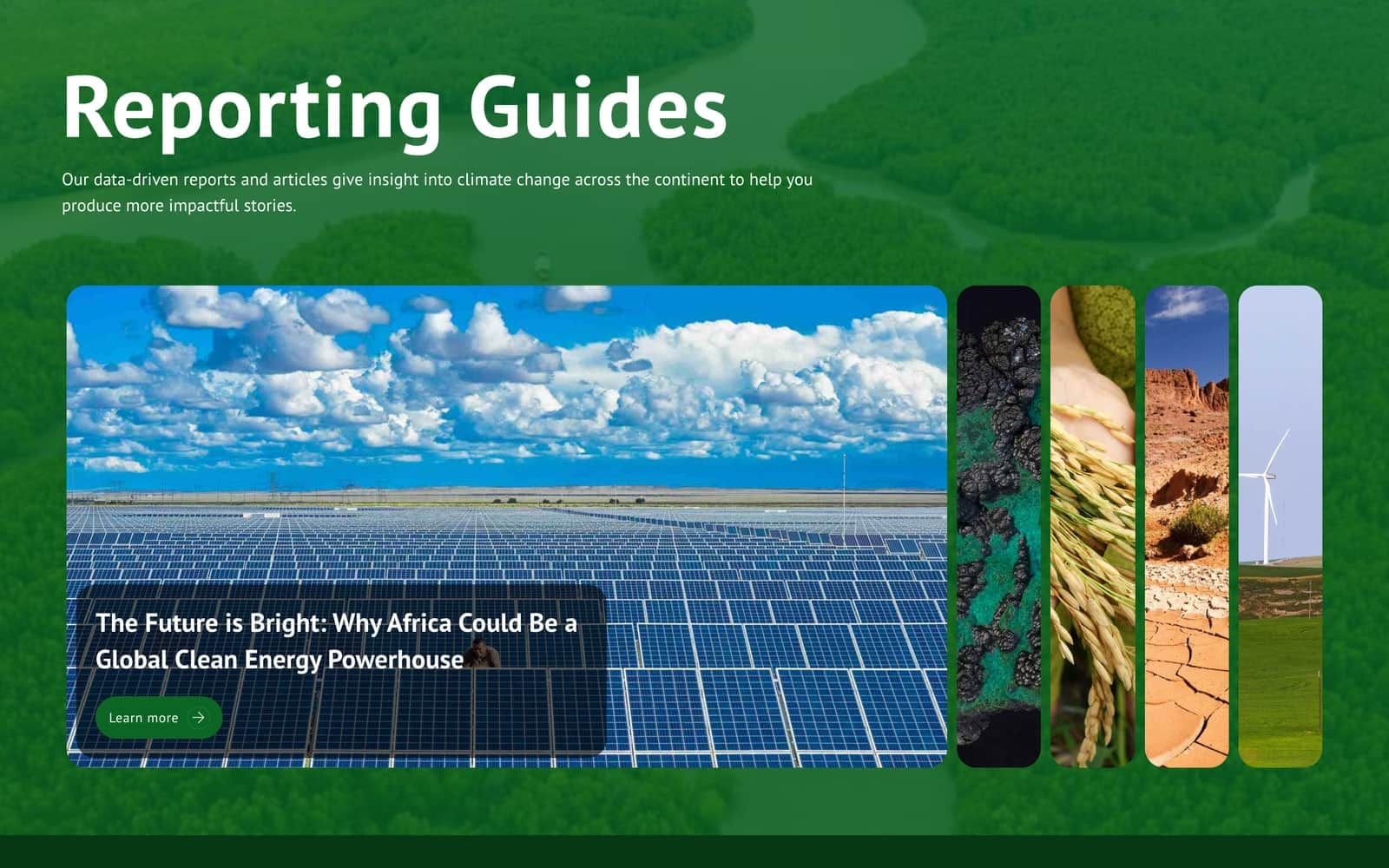
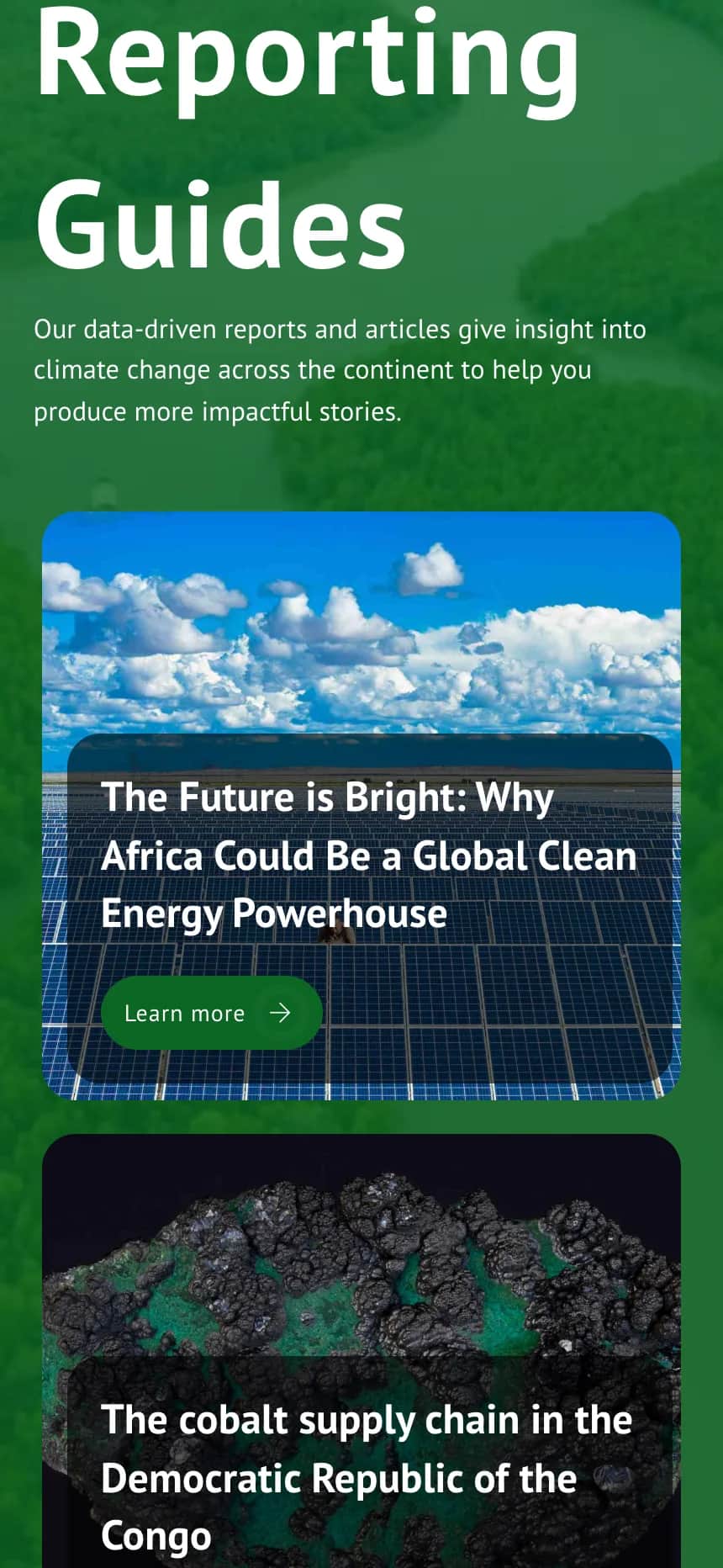
The Toolkit answers to a generalist reporter handed a climate assignment and to a specialist who lives in the subject — and the same page has to work for both. VizStats structured the site around five reporting guides that carry real depth (the cobalt supply chain in the DRC, food security, water systems, clean energy, the continental energy transition) while keeping the entry points shallow enough that a first-time reader is never lost. The Story Hub, Knowledge section, and myth-busting resources sit alongside the guides so a journalist can move from framing to evidence to sources without leaving the platform. Nothing is buried; the depth is there when the reader wants it and out of the way when they don't.

02

Built to stay current, and to stay theirs

A resource platform is only as good as its most recent update, so the Toolkit was built on WordPress and Bricks Builder — the partners maintain the guides, expand the expert directory, and publish to the Story Hub without waiting on engineering. The free online course, prepared by African journalists for African journalists, lives inside the same environment as the reference material, so training and reference reinforce each other rather than sitting in separate silos. The design holds four institutional partners in frame without letting any one voice dominate: the platform reads as its own thing, which is what lets journalists trust it as a neutral working tool rather than any single organization's microsite.

Why it matters

The Climate Reporting Toolkit is live at climatereporting.net as a standing resource for climate journalism across Africa. It gives working reporters a single, maintainable place to find rigorous framing on cobalt, water, food, and energy, to reach African climate specialists through the expert directory, and to train through a free course built by African journalists for their peers. By consolidating guides, sources, and instruction into one platform the partners can keep current, it lowers the cost of reporting a climate story well — and gives the continent's climate coverage a shared reference to build on.